We remain fully operational. Our teams are working around the clock to ensure your deliveries continue safely.

DOWNLOAD THE APP


Copyright © 2025 Desertcart Holdings Limited
DOWNLOAD THE APP



Buy anything from 5,000+ international stores. One checkout price. No surprise fees. Join 2M+ shoppers on Desertcart.
Desertcart purchases this item on your behalf and handles shipping, customs, and support to Cameroon.
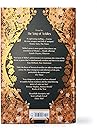
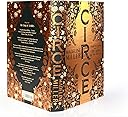
Buy Circe: The stunning new anniversary edition from the author of international bestseller The Song of Achilles (Bloomsbury Publishing) 1 by Miller, Madeline (ISBN: 9781408890080) from desertcart's Book Store. Everyday low prices and free delivery on eligible orders. Review: This is without a doubt one of the best books that I’ve ever read! - I fell in love with Madeline Miller’s writing when I read The Song of Achilles, and I eagerly awaited the release of Circe, because I was desperate to experience the magic that is her storytelling once again. After reading The Song Of Achilles and Circe, I am certain that Miller was born to write about Greek Mythology. She has such a unique way of transporting you, effortlessly, into a time of Greek Gods, demigods, Greek heroes and those mortals either willingly, or unwillingly caught in their orbit. The Song of Achilles will always have a special place in my heart, but Circe is its close companion, as Miller soared to new heights with it and gave me an experience I will never forget. In Circe, we walked among Gods and Goddesses, witnessing myth after myth and it really was a feast for those who have a hunger for Greek Mythology, such as myself. Our journey with Circe begins quite early on in her life when she is still a resident in her fathers halls, where he is very literally the light of her life, “He liked the way the obsidian reflected his light, the way its slick surface caught fire as he passed. Of course he did not consider how black it would be when he was gone. My father has never been able to imagine the world without himself in it.” The Sun God, Helios, is worshiped fiercely and so having the Sun for a father is a very complex thing indeed, you know that without him there will be no light and mortals and gods fear him alike, “some of the lesser gods could scarcely bare to look at him”. It’s understandable that you see him as others do, unreachable, glorious, mighty, and it would be impossible you know, and yet completely reasonable that you want to please him, and Circe does, she longs for him to just notice her, at the very least. She is not naive, simply blinded by the adoration bestowed upon Gods and fathers, “At my father’s feet, the whole world was made of gold…his flesh was hot as a brazier, and I pressed as close as he would let me”, however, as Circe grows, she can no longer fight the truth about her father, her family and the Gods at large, “She knew the stories of Helios’ temper when he was crossed. However gold he shines, do not forget his fire”. These beings are divine by blood alone, she doesn’t belong, couldn’t belong with them even if she tried, so she seeks comfort in a mortal and it is only fitting that this little Goddess, with far too many emotions than any God should have, lets love become her undoing. My heart ached for Circe in those early chapters, she was all but trodden upon, ostracized by her siblings, Pasiphae and Perses, despised by her naiad mother Perse, with her only comfort being her brother Aeetes, “Her eyes are yellow as piss. Her voice is screechy as an owl…those were their earliest attempts at barbs, still dull, but day by day they sharpened”. Circe learns that any pleasure she finds in life is either taken away or soiled after a while, such is a life among immortals. Even with this knowledge you can’t help but try to will things to go right for her, and so when things don’t, I felt Circe’s pain as if it were my own, bore her humiliation, all the while feeling so mortified for her that it felt unkind to read about her hardships, almost as if I were adding to her embarrassment by simply observing it, “Circe’ he said, when he saw me. Just that, as if you might say: foot.” Those chapters were not easy, nor fair, but they ignited in me a fierce love for this heroine who was desperately clawing at an existence of her own, “all my life had been murk and depths, but I was not a part of that dark water. I was a creature within it”. When Circe is banished it feels simultaneously like a blessing and a curse, for she is free of her family, but, what is she without them… Alone on her Island, Circe is forced to focus on herself in a way she never has before, she can no longer sit at her father’s feet or spend time avoiding those who barely tolerate her, and so begins her journey with the very thing that got her exiled: witchcraft. She is an amateur at first, but in time she learns to hone her craft and in turn, crafts a life for herself in this isolation,“I will not be a bird bred in a cage, I thought, too dull to fly even when the door stands open. I stepped into those woods and my life began”. She makes companions of the animals that wonder in her land, with her fierce lion like her shadow. She makes her mixtures and has her routines, her life is not necessarily full, but it is also not stifling like before, she is essentially caged on this Island, but she is also free in a way she never has been before, “what worse punishment could there be, my family thought, than to be deprived of their divine presence?”. And then the visitors come in unpredictable numbers and unpredictable times, and they force her to change again, they harden or soften her, make her paranoid where she had just once been curious, but every time, with every visitor she holds one thing steady in her being, witch, “I learned to bend the world to my will…I would have done that toil a thousand times to keep such power in my hands. I thought: this is how Zeus felt when he first lifted the thunderbolt”. She aids those in need of her help and deals with those who would do her harm, she triumphs as much as she fails, always arriving stronger and wiser on the other side. Circe is ever changing, but what remains true at every turn, is that she is like no other titan, she doesn’t wish to be fawned over, she is content with being part of the story but not at the centre of it, “how did you know not to kneel to me? “Something Odysseus said ‘that he had never met a god who enjoyed their divinity less'”. So it is very comical indeed and at times tragic, how she finds herself caught up in what will be some of the greatest myths to stand the test of time. Alongside Circe’s personal transformation, the inclusion of all these Greek Myths had to be my favourite aspect of this book, and was definitely what blew me away the most. It is otherworldly how an author can combine so many tales in one story and not lose the essence of the main one, to have each one only add to it. I’ve never experienced this level of detail in a retelling and in so many of them, I’m completely flawed at the sheer genius of it all. I do have to say that I think that Circe’s story intertwining with Daedalus’ and Odysseus’ were probably my favourites though, “What brings the famous Daedalus to my shores?’ ‘I am honoured you would know me.’ His voice was steady as a west wind, warm and constant.” Her relationships with both of them were fascinating and beautifully displayed the woman she was becoming, “Odysseus, son of Laertes, the great traveller…he showed me his scars, and in return he let me pretend that I had none”. All of the side characters were just as brilliant and fleshed out as Circe, such is the authors way, that they never truly felt like side characters, they all demanded your attention and seemed to exist independently of you reading this book. I could gush about this book all day and still never do it justice, but there is just so much I want to highlight and praise Miller for, because I honestly can’t find one fault in this book. This is without a doubt one of the best books that I’ve ever read, let alone concerning Greek Mythology. I am so grateful for Madeline Miller’s contribution in keeping these wonderful stories alive and injecting new life into them with her amazing writing and vision. This was a powerful story about a young Goddess, trying to find her way in the world, which is one that will stir a sense of familiarity and companionship in anyone who has felt this in life, especially young women, “I pressed on. If my childhood had given me anything, it was endurance”. Miller skillfully looks at the dynamics between men and women, Greeks and Goddesses in Ancient Greece, and how our decisions really do make us, but it is never too late to take back control of your life. Circe transforms from being a timid little thing, to freely taking lovers, challenging greater Gods and turning men into pigs and I couldn’t of been prouder, “Any other day in all my years of life I would of curled upon myself and wept. But that day his scorn was like a spark falling on dry tinder”. I urge you to pick up this book and experience the story of Circe and the Greek Gods as you never have before, I dare you not to cower before them on the page, for they are that well written. Once again, Miller’s writing is as beautiful and sharp as ever, (I literally highlighted most of this book) and she has cemented her place as one, if not my favourite writer of all time, you’d only be doing yourself a disservice if you never pick up her work. Review: Well crafted - Circe is one of those books that I really think I should have enjoyed more than I actually did. It's well written, well paced and definitely interesting... so technically it ticks all the boxes. But it didn't quite hit the spot for me. I suspect that is one of those 'right book, wrong time' things though, so I'm not lowering my rating. Daughter of Helios, Circe is an odd child born with none of her father's power or her mother's grace. Not beautiful or charming or powerful, she is the odd one out amongst her mother's children. Until the discovery of her true potential, a potential that gets her exiled from her home and banished to a deserted isle. Immortal as she is, this is a tale that spans centuries, as Circe finds her home and hones her powers. This isn't a mythology tale that I know well at all and so I was constantly surprised by Circe's involvement in more well known tales such as Odysseus, Scylla and Icarus. Miller spans out this tale of centuries well, bringing in myriad Gods and humans along the way and impressing me with how well characterised the entire cast were throughout. It's episodic in nature yet it joins well together. It's well written and whilst slow at points, is a clear and entertaining retelling of Homer's works through the eyes of the minor God rather than the human. All in all, this is one of those books that I'd recommend even though it didn't quite catch me. I'll be interested in reading more of the authors works as she has a knack for making mythology accessible and interesting.


| Best Sellers Rank | 34,002 in Books ( See Top 100 in Books ) 7 in Greek & Roman 53 in Historical Fantasy (Books) 60 in Contemporary Fantasy (Books) |
| Customer reviews | 4.5 4.5 out of 5 stars (91,087) |
| Dimensions | 15.4 x 3.6 x 23.6 cm |
| Edition | 1st |
| ISBN-10 | 1408890089 |
| ISBN-13 | 978-1408890080 |
| Item weight | 1.05 kg |
| Language | English |
| Print length | 352 pages |
| Publication date | 19 April 2018 |
| Publisher | Bloomsbury Publishing |
M**E
This is without a doubt one of the best books that I’ve ever read!
I fell in love with Madeline Miller’s writing when I read The Song of Achilles, and I eagerly awaited the release of Circe, because I was desperate to experience the magic that is her storytelling once again. After reading The Song Of Achilles and Circe, I am certain that Miller was born to write about Greek Mythology. She has such a unique way of transporting you, effortlessly, into a time of Greek Gods, demigods, Greek heroes and those mortals either willingly, or unwillingly caught in their orbit. The Song of Achilles will always have a special place in my heart, but Circe is its close companion, as Miller soared to new heights with it and gave me an experience I will never forget. In Circe, we walked among Gods and Goddesses, witnessing myth after myth and it really was a feast for those who have a hunger for Greek Mythology, such as myself. Our journey with Circe begins quite early on in her life when she is still a resident in her fathers halls, where he is very literally the light of her life, “He liked the way the obsidian reflected his light, the way its slick surface caught fire as he passed. Of course he did not consider how black it would be when he was gone. My father has never been able to imagine the world without himself in it.” The Sun God, Helios, is worshiped fiercely and so having the Sun for a father is a very complex thing indeed, you know that without him there will be no light and mortals and gods fear him alike, “some of the lesser gods could scarcely bare to look at him”. It’s understandable that you see him as others do, unreachable, glorious, mighty, and it would be impossible you know, and yet completely reasonable that you want to please him, and Circe does, she longs for him to just notice her, at the very least. She is not naive, simply blinded by the adoration bestowed upon Gods and fathers, “At my father’s feet, the whole world was made of gold…his flesh was hot as a brazier, and I pressed as close as he would let me”, however, as Circe grows, she can no longer fight the truth about her father, her family and the Gods at large, “She knew the stories of Helios’ temper when he was crossed. However gold he shines, do not forget his fire”. These beings are divine by blood alone, she doesn’t belong, couldn’t belong with them even if she tried, so she seeks comfort in a mortal and it is only fitting that this little Goddess, with far too many emotions than any God should have, lets love become her undoing. My heart ached for Circe in those early chapters, she was all but trodden upon, ostracized by her siblings, Pasiphae and Perses, despised by her naiad mother Perse, with her only comfort being her brother Aeetes, “Her eyes are yellow as piss. Her voice is screechy as an owl…those were their earliest attempts at barbs, still dull, but day by day they sharpened”. Circe learns that any pleasure she finds in life is either taken away or soiled after a while, such is a life among immortals. Even with this knowledge you can’t help but try to will things to go right for her, and so when things don’t, I felt Circe’s pain as if it were my own, bore her humiliation, all the while feeling so mortified for her that it felt unkind to read about her hardships, almost as if I were adding to her embarrassment by simply observing it, “Circe’ he said, when he saw me. Just that, as if you might say: foot.” Those chapters were not easy, nor fair, but they ignited in me a fierce love for this heroine who was desperately clawing at an existence of her own, “all my life had been murk and depths, but I was not a part of that dark water. I was a creature within it”. When Circe is banished it feels simultaneously like a blessing and a curse, for she is free of her family, but, what is she without them… Alone on her Island, Circe is forced to focus on herself in a way she never has before, she can no longer sit at her father’s feet or spend time avoiding those who barely tolerate her, and so begins her journey with the very thing that got her exiled: witchcraft. She is an amateur at first, but in time she learns to hone her craft and in turn, crafts a life for herself in this isolation,“I will not be a bird bred in a cage, I thought, too dull to fly even when the door stands open. I stepped into those woods and my life began”. She makes companions of the animals that wonder in her land, with her fierce lion like her shadow. She makes her mixtures and has her routines, her life is not necessarily full, but it is also not stifling like before, she is essentially caged on this Island, but she is also free in a way she never has been before, “what worse punishment could there be, my family thought, than to be deprived of their divine presence?”. And then the visitors come in unpredictable numbers and unpredictable times, and they force her to change again, they harden or soften her, make her paranoid where she had just once been curious, but every time, with every visitor she holds one thing steady in her being, witch, “I learned to bend the world to my will…I would have done that toil a thousand times to keep such power in my hands. I thought: this is how Zeus felt when he first lifted the thunderbolt”. She aids those in need of her help and deals with those who would do her harm, she triumphs as much as she fails, always arriving stronger and wiser on the other side. Circe is ever changing, but what remains true at every turn, is that she is like no other titan, she doesn’t wish to be fawned over, she is content with being part of the story but not at the centre of it, “how did you know not to kneel to me? “Something Odysseus said ‘that he had never met a god who enjoyed their divinity less'”. So it is very comical indeed and at times tragic, how she finds herself caught up in what will be some of the greatest myths to stand the test of time. Alongside Circe’s personal transformation, the inclusion of all these Greek Myths had to be my favourite aspect of this book, and was definitely what blew me away the most. It is otherworldly how an author can combine so many tales in one story and not lose the essence of the main one, to have each one only add to it. I’ve never experienced this level of detail in a retelling and in so many of them, I’m completely flawed at the sheer genius of it all. I do have to say that I think that Circe’s story intertwining with Daedalus’ and Odysseus’ were probably my favourites though, “What brings the famous Daedalus to my shores?’ ‘I am honoured you would know me.’ His voice was steady as a west wind, warm and constant.” Her relationships with both of them were fascinating and beautifully displayed the woman she was becoming, “Odysseus, son of Laertes, the great traveller…he showed me his scars, and in return he let me pretend that I had none”. All of the side characters were just as brilliant and fleshed out as Circe, such is the authors way, that they never truly felt like side characters, they all demanded your attention and seemed to exist independently of you reading this book. I could gush about this book all day and still never do it justice, but there is just so much I want to highlight and praise Miller for, because I honestly can’t find one fault in this book. This is without a doubt one of the best books that I’ve ever read, let alone concerning Greek Mythology. I am so grateful for Madeline Miller’s contribution in keeping these wonderful stories alive and injecting new life into them with her amazing writing and vision. This was a powerful story about a young Goddess, trying to find her way in the world, which is one that will stir a sense of familiarity and companionship in anyone who has felt this in life, especially young women, “I pressed on. If my childhood had given me anything, it was endurance”. Miller skillfully looks at the dynamics between men and women, Greeks and Goddesses in Ancient Greece, and how our decisions really do make us, but it is never too late to take back control of your life. Circe transforms from being a timid little thing, to freely taking lovers, challenging greater Gods and turning men into pigs and I couldn’t of been prouder, “Any other day in all my years of life I would of curled upon myself and wept. But that day his scorn was like a spark falling on dry tinder”. I urge you to pick up this book and experience the story of Circe and the Greek Gods as you never have before, I dare you not to cower before them on the page, for they are that well written. Once again, Miller’s writing is as beautiful and sharp as ever, (I literally highlighted most of this book) and she has cemented her place as one, if not my favourite writer of all time, you’d only be doing yourself a disservice if you never pick up her work.
A**E
Well crafted
Circe is one of those books that I really think I should have enjoyed more than I actually did. It's well written, well paced and definitely interesting... so technically it ticks all the boxes. But it didn't quite hit the spot for me. I suspect that is one of those 'right book, wrong time' things though, so I'm not lowering my rating. Daughter of Helios, Circe is an odd child born with none of her father's power or her mother's grace. Not beautiful or charming or powerful, she is the odd one out amongst her mother's children. Until the discovery of her true potential, a potential that gets her exiled from her home and banished to a deserted isle. Immortal as she is, this is a tale that spans centuries, as Circe finds her home and hones her powers. This isn't a mythology tale that I know well at all and so I was constantly surprised by Circe's involvement in more well known tales such as Odysseus, Scylla and Icarus. Miller spans out this tale of centuries well, bringing in myriad Gods and humans along the way and impressing me with how well characterised the entire cast were throughout. It's episodic in nature yet it joins well together. It's well written and whilst slow at points, is a clear and entertaining retelling of Homer's works through the eyes of the minor God rather than the human. All in all, this is one of those books that I'd recommend even though it didn't quite catch me. I'll be interested in reading more of the authors works as she has a knack for making mythology accessible and interesting.
J**R
A Very Human Goddess
Having read ‘The Odyssey’ ages ago, I admit all I remembered of Circe was that she’d used her witchcraft to turn Odysseus’ men into swine and the speed with which she submitted to Odysseus when her magic didn’t work on him. I liked how she surrounded herself with wild animals but wasn’t impressed with how quickly she invited Odysseus to her bed and allowed him and his men to spend a year on her island. I’m not usually a fan of stories told in first person, but this was, without doubt, the best way to tell this story. Ms Miller has taken someone who was a minor character in ‘The Odyssey’ and given her a larger-than-life story. I think what makes this book such a riveting read is the total focus on Circe. There are no unnecessary side stories. We’re drawn into Circe’s life; we’re privy to her thoughts… nothing is hidden from us. She’s far from perfect; she can be unreasonable, and gives in to her negative emotions, but I found her very easy to like. Although the focus of the story is all on Circe, we’re still treated to an astounding cast of characters – Scylla; Daedalus; Circe’s sister, Pasiphae, mother of the Minotaur; Medea; not to mention the Titans, gods and goddesses. And, last but by no means least, Penelope – another well-written woman, she quickly became my second favourite character. Ms Miller uses straightforward, simple words, yet her descriptions are lyrical and evocative, like her description of Helios’ halls, which also conveys something of the sun god’s nature… ‘My father’s halls were dark and silent. His palace was… buried in the earth’s rock, and its walls were made of polished obsidian. Why not? They could have been anything in the world, blood-red marble from Egypt or balsam from Araby, my father had only to wish it so. But he liked the way the obsidian reflected his light, the way its slick surfaces caught fire as he passed. Of course, he did not consider how black it would be when he was gone. My father has never been able to imagine the world without himself in it.’ I liked that her witch powers don’t appear to her in an instant; she has to put in the work and practice, practice, practice. Circe’s interactions with the other characters, especially Daedalus, Odysseus, her son, Telegonus, even Penelope and Telemachus are all richly told. In Ms Miller’s hands, they become real people, each one a distinct character, strong and memorable in their own way. The gods are portrayed as illogical and capricious, which is how the Ancient Greeks saw them, but they don’t come across as stereotypical or two-dimensional. Although a minor deity, Circe isn’t portrayed as an unattainable goddess. We get to know this remarkable woman extremely well because we’re allowed to share her most personal thoughts. For me, that’s what makes this book – we’re shown Circe as a woman, with the same needs, hopes, desires and dreams as humans. A scholar of the Classics, Madeline Miller knows her Greek mythology inside and out. She’s amassed all that’s out there about Circe and spun a very believable tale. I read this book slowly, not because it was difficult to read, but I was savouring every part of it; I did not want it to end. When I got to the ending, it made me cry; it was exactly how I’d wanted it to end. At the beginning of May, I was lucky enough to attend a talk at the British Museum with Madeline Miller, Bettany Hughes and Kamila Shamsie. Ms Miller said she’d wanted to reclaim Circe’s story; she wanted to bring the focus back to this very clever woman who had the wit to surpass Odysseus in their verbal sparring. I suppose one can say, if ‘The Odyssey’ was a man’s story then ‘Circe’ is the woman’s story of that same time including the ages before and after.
S**S
{My Thoughts} What Worked For Me A Classic Tale Reimagined – Taking a classic story and reinventing it with a modern twist is nothing new. We see it time after time, but the usual reimagining places the characters and plot in a contemporary setting as the story plays out. With Circe, Madeline Miller kept the characters and the setting, and instead shifted the focus, placing it solely on Circe. Those of you with a background in mythology will see many, many elements from classic Greek mythology (especially The Odyssey) popping up in this book. However, if you’ve lived under a rock and never even knew there was such a thing as mythology it won’t matter. Miller gives you everything you need to know and she does it seamlessly. A Woman with Attitude – If you’re anything like me, you will come to adore Circe, the book and the woman. Born into one of the two most powerful families of gods, Circe adored her father, Helios, but never quite measured up. Where her siblings were gorgeous and powerful from an early age, Circe was plain and seemingly powerless. Tormented by her own family, Circe grew more and more fascinated with mortals. Falling in love with one, brought out her previously unknown powers of witchcraft. “I was too wild to feel shame. It was true. I would not just uproot the world, but tear it, burn it, do any evil I could to keep Glaucos by my side. But what stayed most in my mind was the look on my grandmother’s face when I’d said that word, pharmaka. It was not a look I know well among the gods.” This girl had gumption and she used her new power to punish her rival, creating a monster all came to feared. But, she paid a price for going too far. Circe was banished to the small island of Aiaia for eternity. This is where the book Circe really took off for me. On the island, I found it impossible not to admire and root for this woman who year after year, century after century, faced her fears, honed her powers, and learned to stand up for herself. “She was gone. But I said it anyway, to that great empty room and my son’s dreaming ears: “You do not know what I can do.” Soap Opera of the Gods – You might think a story of a woman alone on an island could get dull, but you would be wrong. Circe lived a lonely life, but was not without the occasional visitor, many bringing adventure and challenges to her life. Hermes flitted in and out with news and gossip from the worlds of gods and mortals. Her sister, Pasiphae, granted Circe temporary exile to help deal with her little Minotaur problem. Shipwrecked sailors soon discovered the wrath of Circe. And then came Odysseus, perhaps her most well known visitor, bringing to Circe a lasting love she was willing to die for. The level of drama never failed! That House – I really can’t say any more, but for those who have read Circe: I want that house! What Didn’t Absolutely EVERYTHING worked for me in Circe! {The Final Assessment} Madeline Miller is definitely a writer to admire. Reinventing the life of a minor goddess into a remarkable woman while remaining faithful to the original mythology can be no small feat. Miller did it in the best way possible, by knowing her star character and sticking to her story. From start to finish Circe was all about Circe, no long tangents, no veering off into some other god’s story. Just Circe: her life, her feelings, her mistakes, her heart, her choices. I haven’t yet read Millers’s debut, Song of Achilles, but I will. I’m already looking forward to that next trip to ancient Greece. If it’s anything like Circe, I’m sure to find the journey immersive, entertaining, exciting, everything! Just incase I haven’t been clear, I loved Circe. She will be one of my top ten books this year. Grade: A
M**C
The print is tiny. The one star is not for the content. The print is too tiny to read comfortably, even with reading glasses. I bought the gold paperback version.
Y**A
What a precious story. Best read of the year for me.
A**O
I love this author & after reading "The song of Achilles," this didn't disappoint! Very beautiful connection between the two books in a very different story line. Entertaining from beginning to end. As a single woman in her late 30s, I felt somehow seen in Circe. Working on the witchcraft ;) Heads up!—The pocket book has the tiniest font size.
B**Y
Wanted to have an English copy for so long, it came in great condition with a very reasonable price
Trustpilot
1 month ago
1 month ago